Rice soap benefits for the body
Rice has been part of beauty routines across Asia for centuries. Here is what rice soap is, what it honestly does for the body, and how to use it in hot weather.
Rice soap is everywhere right now, from Thai rice bars to Korean and Turkish versions. Most people buy it because they have heard rice is good for the skin. That is partly true, and it helps to know which part. Here is a clear look at rice soap and what you can reasonably expect from it.
Rice in beauty traditions
Rice has been used in beauty routines across East and Southeast Asia for centuries. The best-known example is rice water, the cloudy water left after soaking or rinsing rice, which has long been used to wash the face and hair. Rice flour and rice bran have also been used in traditional powders and scrubs.
Rice contains starch, which gives a soft, silky feel on the skin, and rice bran contains natural oils. In modern skin care, rice-derived ingredients are used mainly for their gentle, smoothing feel.
Rice dust, rice water and rice bran
These names appear on many labels and they are not quite the same thing. Rice water is the starchy water from soaking or rinsing rice. Rice bran is the outer layer of the grain, and it is where rice bran oil comes from. Rice dust or rice powder usually means finely milled rice.
You will also see rice soap from Thailand, Korea and Türkiye. The idea is similar in all of them: a soap built around rice, with a soft feel and a light, clean scent. The rest of the formula is what makes each one different, so it is worth reading the label.
What rice soap honestly does
Like any soap, rice soap is on your skin for a short time before you rinse it away. What you can expect is a pleasant, clean wash:
- A clean, fresh feel after a hot day or a workout
- Skin that feels soft and smooth after rinsing
- A light, clean scent that is not heavy in humid weather
- With a loofah, a gentle scrub that helps lift dead skin
You will often see rice soap sold with promises about changing skin tone or removing marks. A soap cannot do that, and we do not claim it. Rice soap is a nice soap to wash with. That is reason enough to enjoy it.
Who it suits
Rice soap suits normal and oily skin well, and it is a good match for UAE weather. If you sweat a lot or like to feel properly clean after the gym or the beach, its fresh feel works well. If your skin is dry, use the sponge version and follow with a moisturiser.
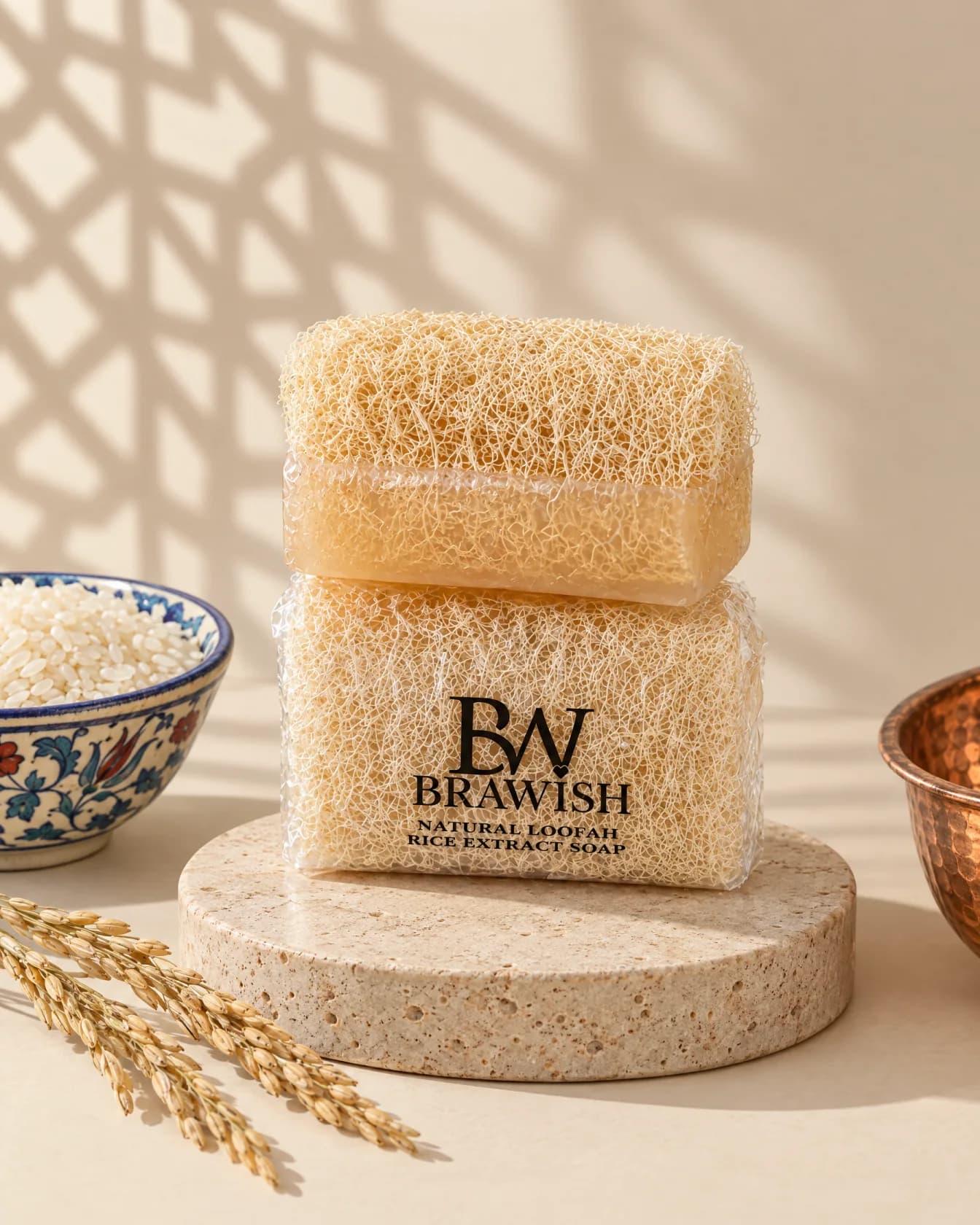
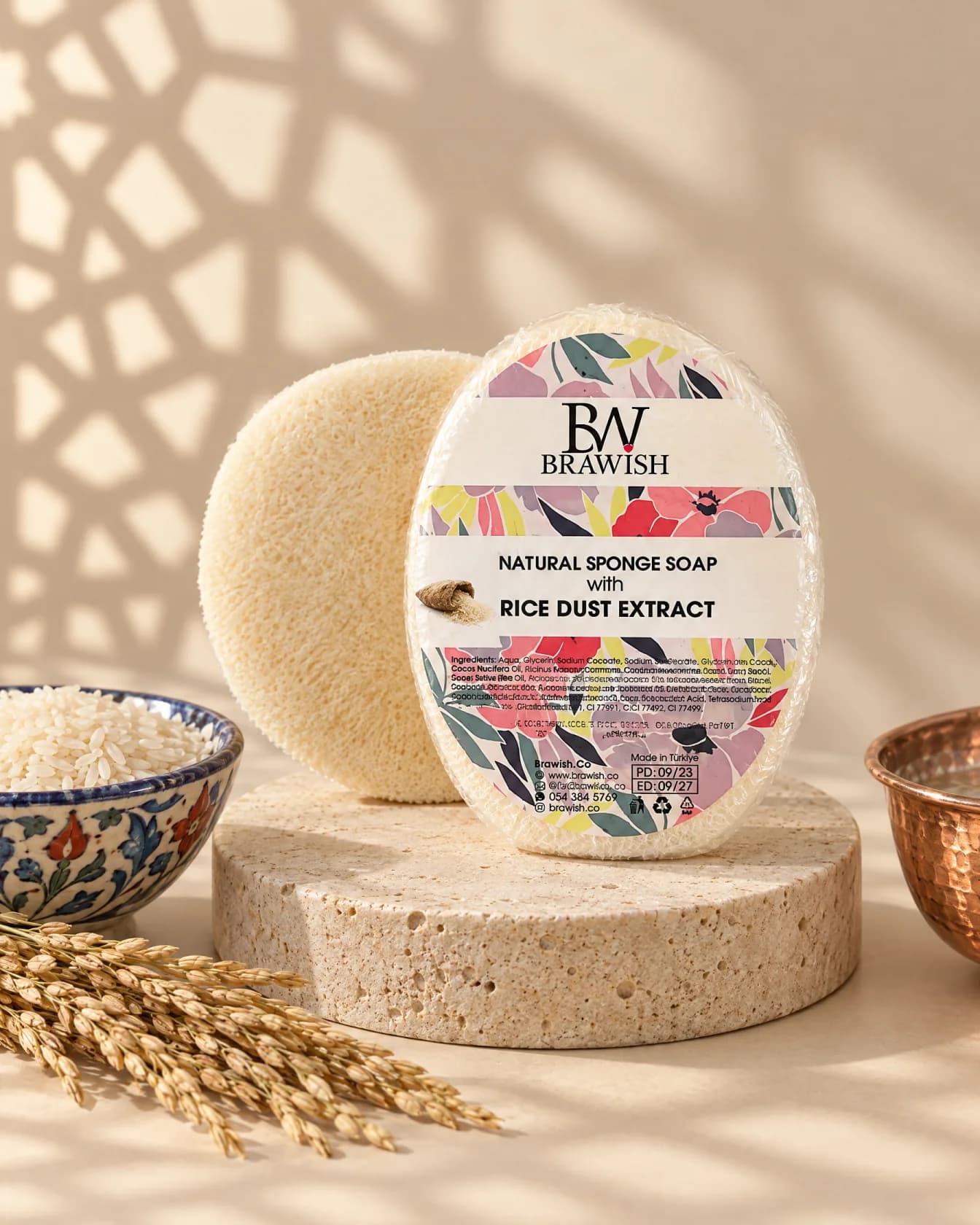
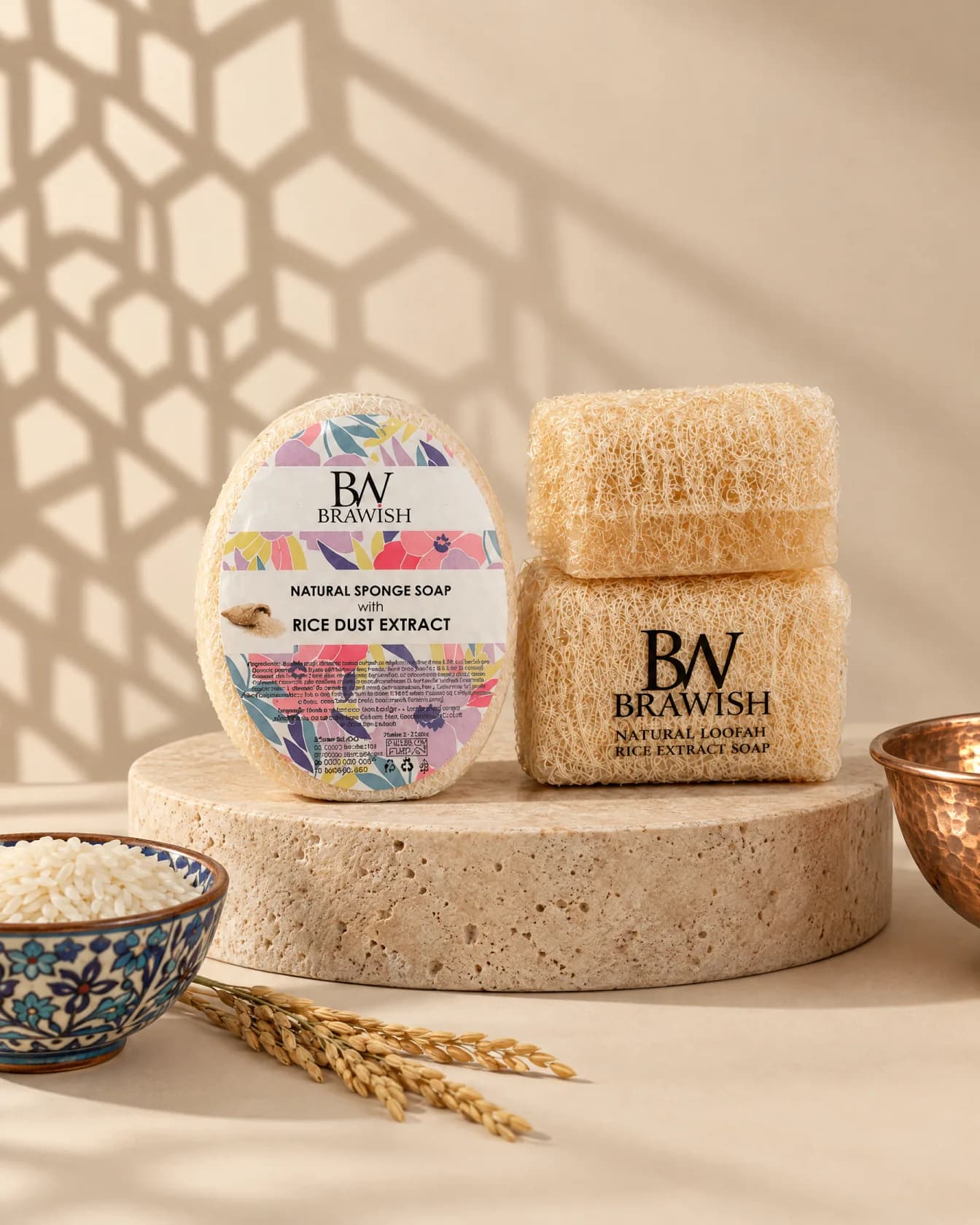
Brawish makes rice soap in two forms. The rice dust loofah soap has a natural loofah inside for a firmer scrub two or three times a week. The rice dust sponge soap is soft and made for every day.
How to use rice soap for the body
- On scrub days, use the loofah soap in small circles with light pressure, focusing on the back, arms and legs.
- On the other days, use the sponge soap for a soft wash.
- Shower with lukewarm water and keep it short.
- Moisturise afterwards, even if your skin is oily. A light lotion is enough.
Our soaps are made for the body. For the face, which has thinner skin, use a cleanser made for facial skin. And if any soap leaves your skin red, tight or itchy, stop using it and go back to something milder for a few days. Your skin usually tells you quickly what suits it.