Loofah soap vs sponge soap: which one is for you
One gives a firmer scrub, the other a soft daily wash. Here is how loofah soap and Turkish sponge soap differ, who each suits, and how to use both in one week.
Brawish makes two kinds of soap, and the question we hear most is which one to pick. Both clean the body and both come in the same family of scents. The difference is in how they feel on your skin and how often they are meant to be used. Once you know that, choosing is easy.
What a loofah soap is
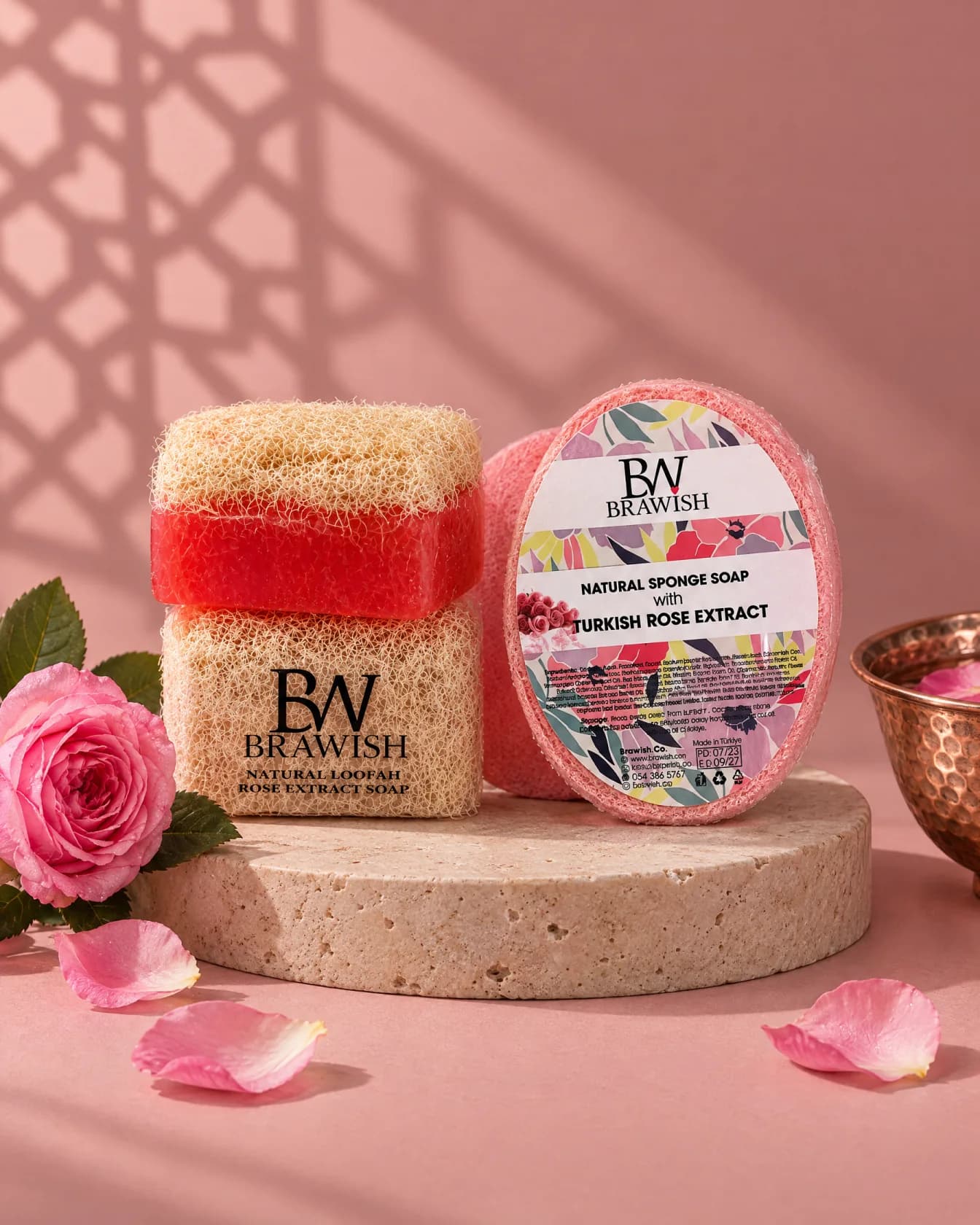
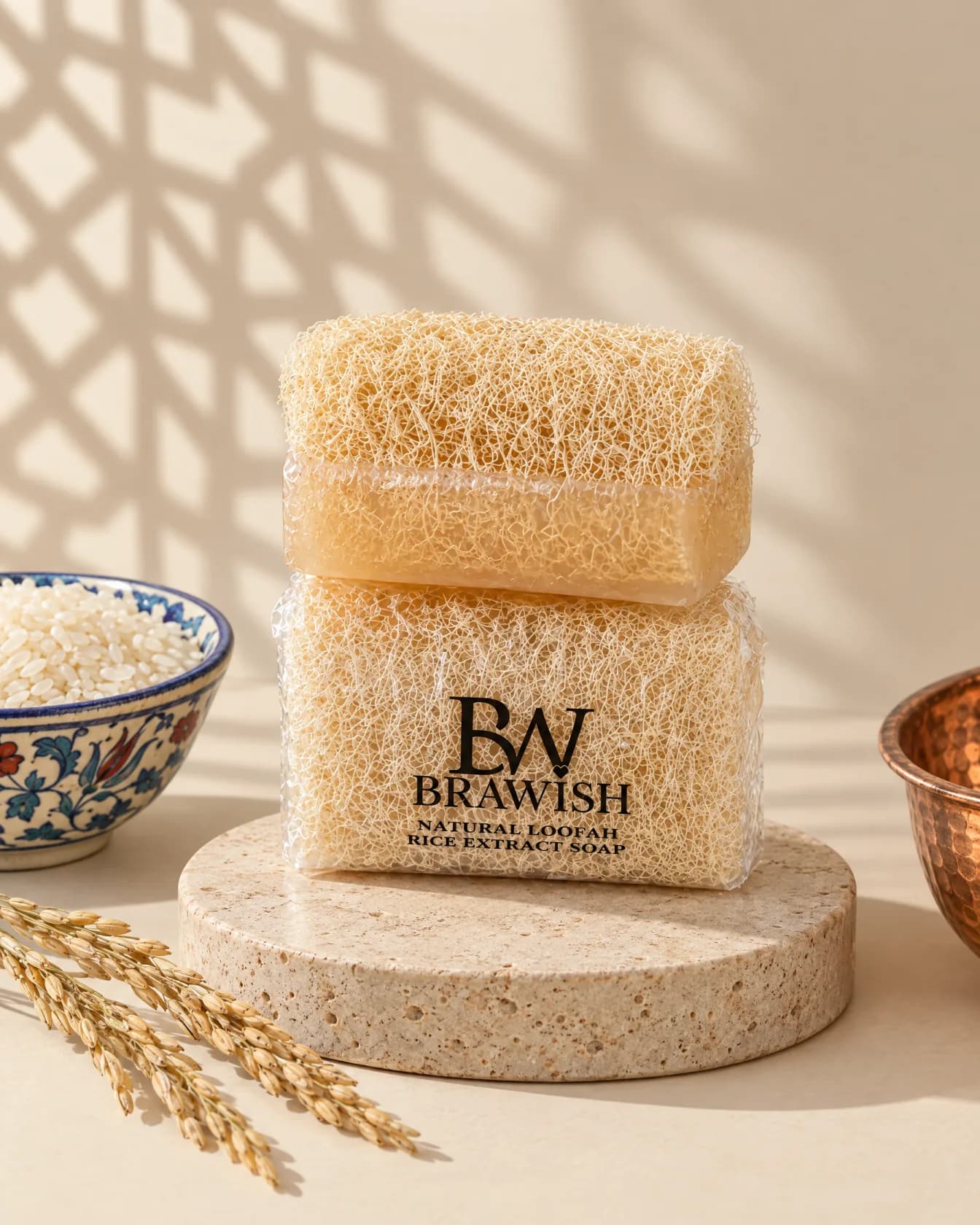
A loofah is not a sea sponge. It is the dried, fibrous inside of a gourd plant, the same material used in traditional bath scrubbers. In a loofah soap, a slice of natural loofah is set inside a glycerin bar. Each Brawish loofah soap weighs 125 g.
As you use the bar, the loofah fibres come to the surface. You get soap and scrub in one step, with no separate mitt or tool. The texture is noticeably firmer than a washcloth, which is why we suggest it two or three times a week rather than daily.
What a sponge soap is
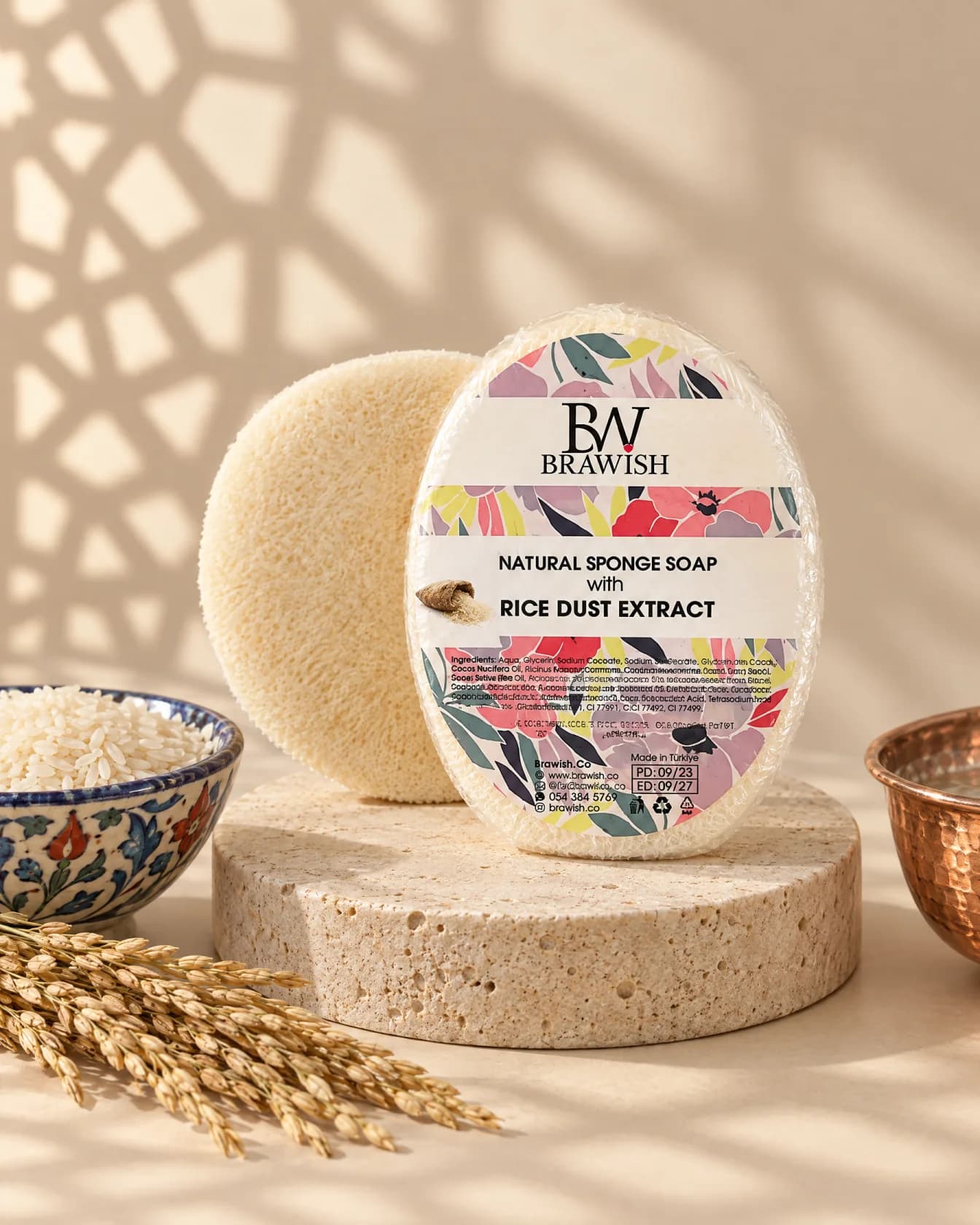
A Turkish sponge soap is soap fused with a soft sponge. You wet it, squeeze it a few times, and it builds a thick, cushioned lather. There is no scratchy texture, so it is made for every day. Each Brawish sponge soap weighs 230 g, and it is made without SLES, sulfates or parabens.
The difference at a glance
- Feel: loofah soap gives a firmer scrub; sponge soap gives a soft, foamy wash.
- How often: loofah soap two or three times a week; sponge soap every day.
- Size: loofah soap 125 g; sponge soap 230 g.
- Best for: loofah soap for rough areas and sweaty days; sponge soap for daily washing and sensitive skin.
Which one suits your skin
If your skin is oily or you sweat a lot, from the gym, the heat or a beach day, a loofah soap on a few days a week gives you that freshly scrubbed feeling. Use a sponge soap on the days in between.
If your skin is dry or sensitive, start with a sponge soap only. If your skin is happy after two weeks, try a loofah soap once a week on rough spots like elbows, knees and heels.
If your skin is normal, either works. Many people simply like having both in the shower.
If you have body spots or rough bumps such as keratosis pilaris, keep any scrubbing gentle and occasional, and avoid sore or broken areas completely.
Why have the scrub or sponge built in
A separate pouf or loofah hangs in a warm, damp bathroom for weeks, and it is easy to forget to replace it. With a loofah soap or a sponge soap, the tool and the soap are used up together, so you start fresh with each new bar. It also means only one thing to pack for the gym or a trip, instead of a bottle and a pouf.
Brawish soaps are made in Türkiye and shipped from Dubai. Both ranges share the same family of scents, so you can match a loofah soap and a sponge soap, or mix two scents you like.
A simple week with both
- Monday, Wednesday, Friday: loofah soap, light pressure, small circles.
- Other days: sponge soap for a soft wash.
- Every day: moisturise after the shower, while skin is still a little damp.
If any soap or scrub leaves your skin red, stinging or itchy, stop using it and give your skin a few days to settle.