Why Your Body Needs Exfoliation
Your skin naturally sheds dead cells every 28-40 days. But this process slows down with age, sun exposure, and environmental factors. When dead cells accumulate faster than they shed, your skin becomes dull, rough, and prone to breakouts. Pores get clogged, ingrown hairs develop, and moisturizers sit on top of the dead layer instead of penetrating to living skin.
Exfoliation removes this dead layer, revealing the fresher skin underneath. It unclogs pores, prevents ingrown hairs, improves skin texture, and helps your skincare products absorb better. In hot, humid climates, exfoliation is especially important because sweat and oil mix with dead skin cells to create the perfect conditions for body acne.
Physical vs Chemical Exfoliation
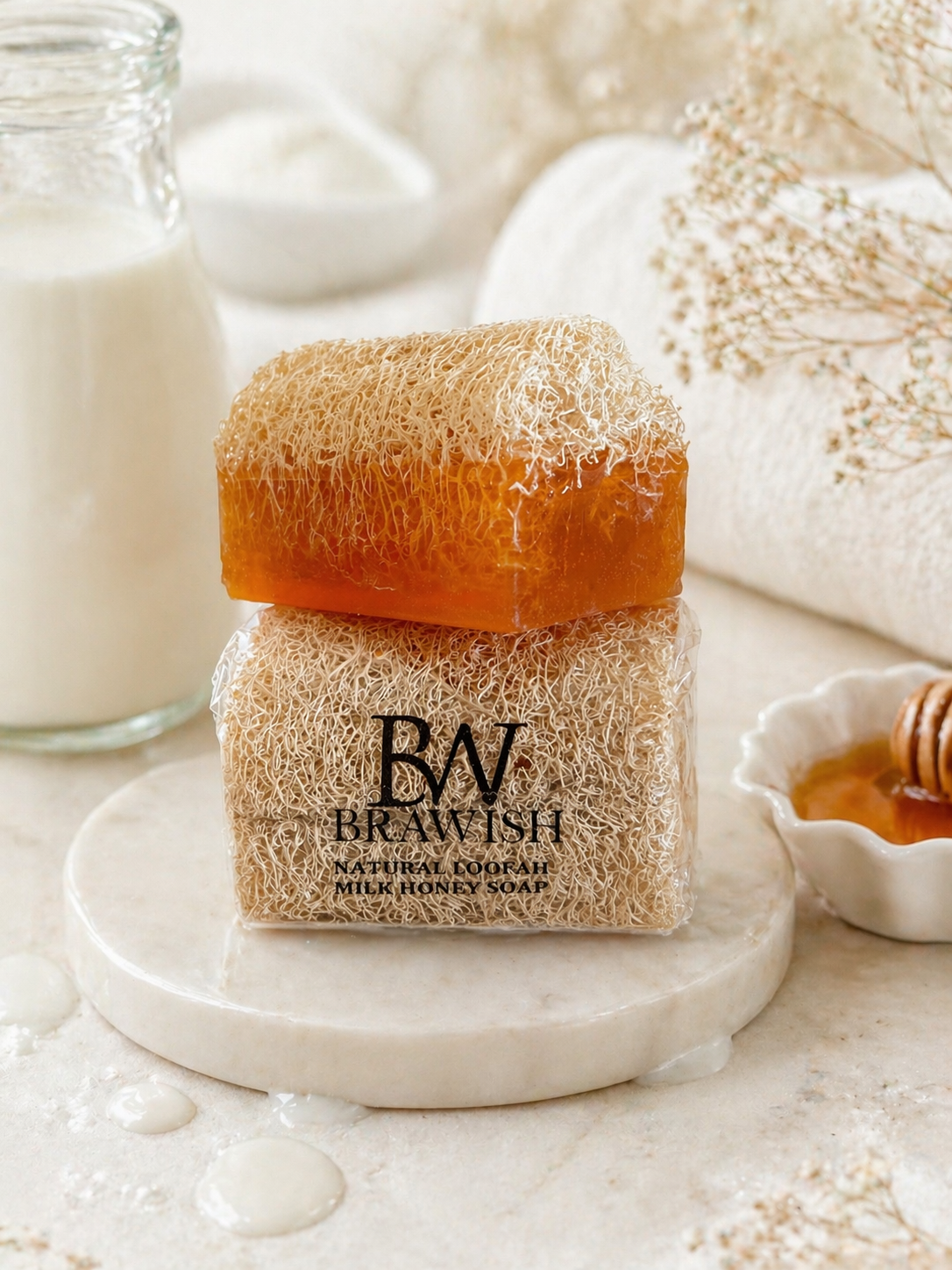
Physical exfoliation uses friction to manually remove dead skin cells. Tools include loofahs, scrubs, brushes, and exfoliating gloves. The advantage is immediate results — you can feel smoother skin right after use. The natural loofah embedded in loofah soap is a form of physical exfoliation.
Chemical exfoliation uses acids (AHAs, BHAs) to dissolve the bonds between dead skin cells. Common examples include lactic acid (from milk), salicylic acid (from willow bark or aloe vera), and glycolic acid. Chemical exfoliants work at a deeper level and are often better for sensitive skin because they do not require friction.
The most effective approach combines both. Natural ingredients like rice extract provide chemical exfoliation (phytic acid is a gentle AHA), while the loofah provides physical exfoliation. This dual action clears dead skin from both the surface and within the pores.
How Often to Exfoliate by Skin Type
Over-exfoliation is a real risk. Your skin needs time to regenerate between sessions. Exfoliating too frequently strips your skin barrier, causes micro-tears, and triggers inflammation — making your skin worse, not better.
- Normal skin: 2-3 times per week with loofah, daily with sponge
- Oily or acne-prone skin: 3 times per week with loofah, daily with sponge
- Dry skin: 2 times per week with loofah, daily with sponge
- Sensitive skin: 1-2 times per week with loofah (start low), daily with sponge
- Active breakouts: sponge only until inflammation subsides
Body Areas That Need Extra Attention
Not all body skin is created equal. Some areas accumulate more dead skin and need more focused exfoliation.
Your elbows and knees have thicker skin that builds up rough, dark patches. These areas benefit from regular loofah exfoliation — the physical scrubbing action removes the thick dead layer that moisturizers cannot penetrate on their own.
Your back is the most acne-prone body area because it has a high density of oil glands and is difficult to clean properly with just your hands. A loofah soap bar gives you the reach and exfoliation needed to keep your back clear.
Your upper arms often develop keratosis pilaris (small, rough bumps caused by keratin buildup). Gentle but consistent exfoliation with ingredients like lactic acid (from milk) and physical loofah action is the most effective natural treatment.
5 Common Exfoliation Mistakes
Even with the right products, technique matters. These mistakes can turn exfoliation from helpful to harmful.
- Using too much pressure — let the exfoliant do the work, not your force
- Exfoliating every day with a harsh scrub — your skin needs recovery time
- Exfoliating sunburned or irritated skin — wait until it heals
- Skipping moisturizer after exfoliation — freshly exfoliated skin absorbs moisture better, so take advantage
- Using a dirty loofah or washcloth — bacteria buildup causes the exact breakouts you are trying to prevent
Building Your Exfoliation Routine
The simplest effective routine: use a loofah soap 2-3 times per week for deep exfoliation, and a sponge soap on the remaining days for gentle daily maintenance. This gives your skin consistent care without the risk of over-exfoliation.
Apply the soap to damp skin and use gentle, circular motions. Focus on rough areas (elbows, knees, heels) and acne-prone areas (back, chest, shoulders). Rinse thoroughly with lukewarm water and pat dry — do not rub. Follow with a light, non-comedogenic moisturizer.
Give any new exfoliation routine at least 3-4 weeks before judging results. Your skin's renewal cycle is approximately 28 days, so it takes at least one full cycle to see the impact of consistent exfoliation.